



Remember When Play Was Real?
Before screens took over, we learned courage by climbing too high and balance by almost falling. OTs want to bring that back — but safer, smarter, and for every kid.
No more swinging good times: The changing face of the Singapore playground
Straits Times Feature: 8 November 2025
Featured Occupational Therapists:
Jewel Yi, Senior Occupational Therapist @ Little Marvels
Evelyn Chan, Senior Occupational Therapist @ NTUC First Campus
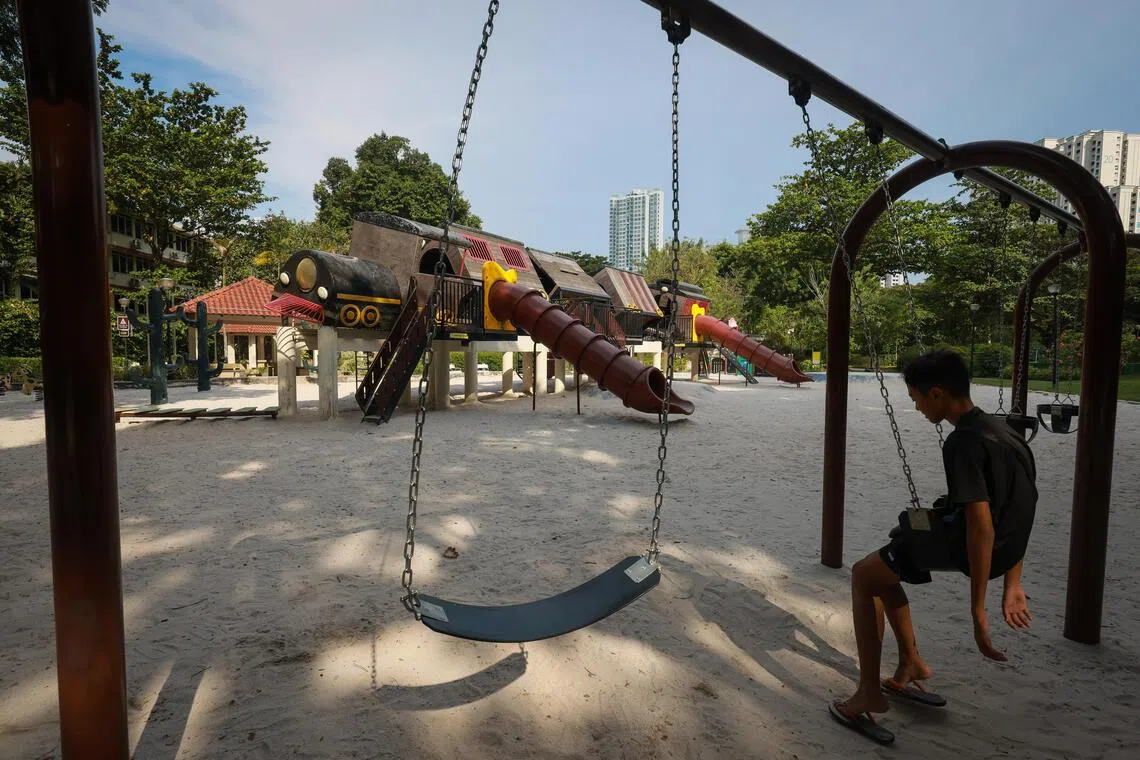 The tilting train playground in Tiong Bahru Park on Oct 31.
ST PHOTO: GAVIN FOO
Playgrounds in Singapore have evolved, with traditional swings becoming less common due to space constraints and strict safety regulations that require large buffer zones. Although the number of playgrounds has grown, many lack swings or meaningful play features, raising concerns among parents, professionals, and even Parliament. Safety incidents still occur, and public feedback frequently highlights damaged equipment or poor maintenance.
Senior occupational therapist Jewel Yi highlights deeper issues: many modern playgrounds are visually impressive but developmentally ineffective. She observes that they often lack proper grip points, inclusive design, and opportunities for essential sensory and motor experiences — making them challenging for both neurotypical children and those with developmental needs. Some playgrounds are overly restrictive, offering no real movement challenges, while others prioritise aesthetics over function, resulting in poor play flow and limited imaginative or gross motor play.
Professionals across the field emphasise the importance of balanced risk, with meaningful challenge being critical for healthy motor, sensory, and emotional development. Excessive risk aversion can hinder children’s growth, while well-designed structures—combined with safe materials—can support exploration and skills acquisition. Parents also play a key role in supervising and guiding their children while allowing room for safe risk-taking.
Experts like NTUC First Campus senior OT Evelyn Chan and playground designers agree that children need physical, sensory-rich play spaces to develop confidence, body awareness, and resilience. Without access to such environments, many may turn to screens, contributing to rising mental health concerns among youth.
Play advocates note that an ideal playground includes diverse, age-appropriate features (like slides, swings, trampolines, rock walls, and flying foxes), good environmental conditions, and inclusive elements accessible to children of different abilities. The article also highlights emerging trends such as nature-based play, biophilic playgrounds, customised thematic designs, and larger neighbourhood play hubs.
Ultimately, OTs and other experts call for more thoughtful, child-centred playground design, with involvement from child-development professionals, to ensure that Singapore maintains inclusive, developmentally meaningful play spaces that support healthier, more active children.
(Source: The Straits Times)