



What Matters Most at the End of Life: The Power of Love, Connection and a Helping Hand
Through her work with dying patients, an occupational therapist discovers that the most meaningful things in life are often the simplest.
A family photo, a hand to hold: An occupational therapist learnt what matters most to dying patients
CNA Feature: 15 November 2026
Featured Occupational Therapist:
Esther Lim, Senior Occupational Therapist @ St Luke’s Hospital
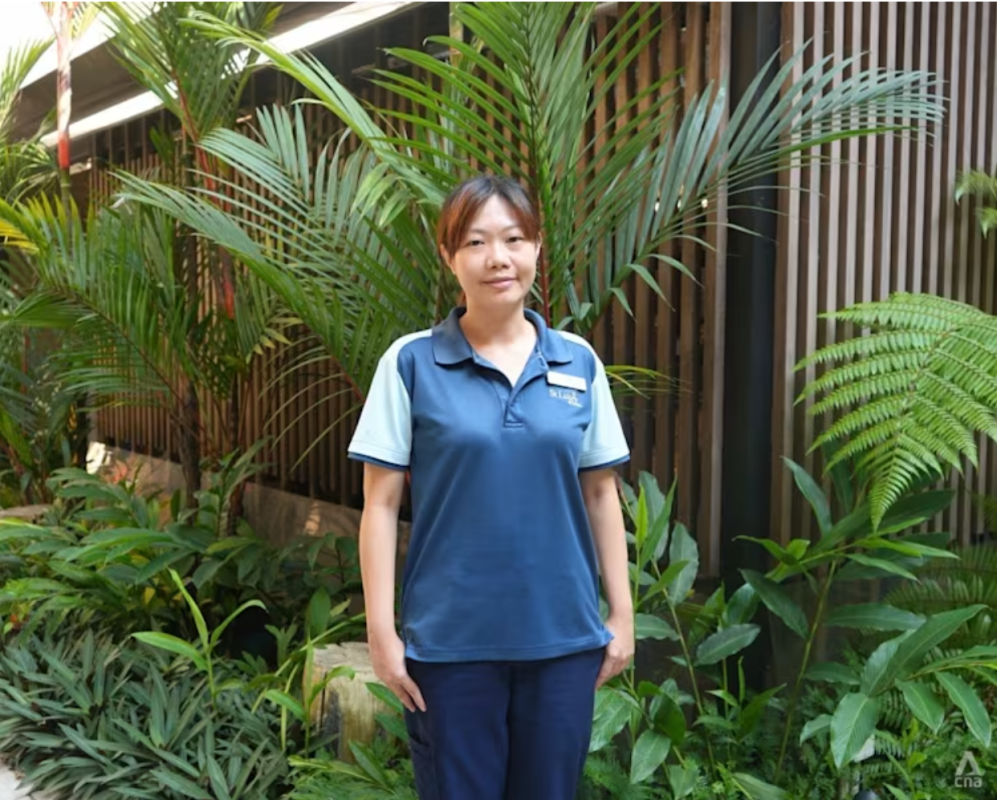
Occupational therapist Esther Lim of St Luke’s Hospital helps patients nearing the end of life find comfort, fulfil their last wishes and create meaningful memories for their loved ones. (Photo: St Luke’s Hospital)
After working with terminally ill patients at St Luke’s Hospital for three years, occupational therapist Esther Lim has observed how priorities change as people approach the end of life. Many focus on loved ones they will leave behind, with some wishing for family photoshoots, a return home or time with family. “When time is limited, the priorities often become much clearer,” said Lim, 40.
Unlike conventional occupational therapy, which focuses on recovery and independence, palliative care centres on comfort, meaning and closure. Lim helps patients manage symptoms such as pain and fatigue while making their remaining time more meaningful. “The goals of OT are not so much of restoring function or independence, but about bringing comfort, exploring meaning and having closure,” she explained.
One encounter changed Lim’s perspective. When she asked an elderly patient with little family support if he needed anything, he simply asked to hold her hand. “I just held his hand and assured him that he’s not alone in that journey, and that the healthcare team will continue to walk alongside him,” she recalled.
Today, Lim helps patients fulfil their last wishes and create keepsakes such as photographs, letters, fingerprint art and voice recordings for loved ones. She also arranges simple outings for patients to enjoy favourite hawker meals or return home. With support from staff and families, even patients with limited mobility can experience these meaningful moments.
Although she initially worried about the emotional challenges of the job, Lim discovered that end-of-life care also brings laughter and joy. One patient, after a makeover and family photoshoot, told her: “I come alive now.” A patient once asked her, “If you only had seven days left on Earth, what would you do?” The question reminded Lim to cherish relationships and make time for what matters. She hopes conversations about death and end-of-life care can begin earlier, allowing families to face life’s final transition “with love”.
(Source: CNA Lifestyle)