



Healing Takes More Than Medicine
OTs fill the space between medical recovery and real life — helping people rebuild routines, regain confidence, and reconnect with what matters
More than just volunteers: How a social worker & occupational therapist are making a lasting impact in S’pore
MS News Feature: 4 Auugust 2025
Featured Occupational Therapist:
Zubaidah Yusoff, Occupational Therapist, Deputy Director & Head of Special Projects @ SATA CommHealth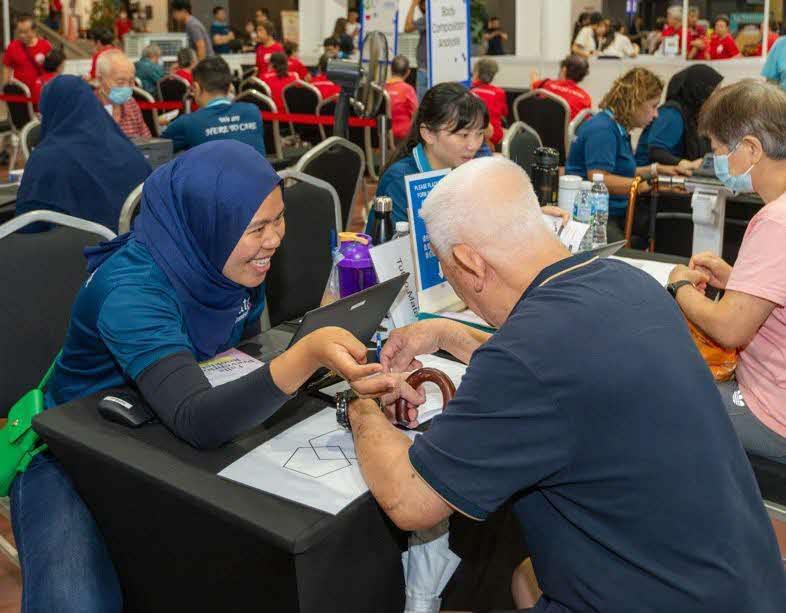 Zubaidah at an outreach event where seniors are screened for their cognitive wellness – Image courtesy of Zubaidah Yusoff
For nearly two decades, Occupational Therapist Zubaidah Yusoff has dedicated her career to helping people rebuild their independence after major health events such as stroke, dementia, or disability. In her current role as Deputy Director and Head of Special Projects at SATA CommHealth, she works with referrals from the Agency for Integrated Care (AIC) and partners closely with social workers and fundraising teams to ensure that clients — including financially stretched middle-income families — can still access essential therapy.
Zubaidah’s journey into occupational therapy began after her A-Levels, when volunteer experience exposed her to the creativity and blend of art and science that define the profession. She later deepened her expertise through master’s degrees in Advanced Occupational Therapy and Public Health, shaping her ability to support both individual recovery and broader system improvements. One memorable case during the Covid-19 pandemic involved helping a client with dementia regulate his sleep cycle — a change that improved not only his well-being, but also eased the burden on his family.
She continues to address common misconceptions about occupational therapy, clarifying that “occupation” refers to daily living activities, not employment, and explaining that OT differs from physiotherapy by addressing cognitive, emotional, and functional needs alongside physical recovery. Zubaidah also emphasises the distinction between trained professionals and volunteers, noting that while volunteers support simple tasks, occupational therapists rely on clinical reasoning, specialised training, and evidence-based practice to guide clients through complex challenges.
Despite the emotional demands of her work, Zubaidah remains deeply committed to the sector. She hopes for greater public recognition of occupational therapists and the essential role they play in supporting people through illness, disability, and major life changes — walking alongside individuals as they strive to regain independence, dignity, and meaningful participation in everyday life.
(Source: MS News)